

How Weather Damage Turns Simple RV Removal Into a Bigger Project
At some point, almost every RV owner reaches the same conclusion: this thing isn’t going anywhere anymore. The trips stopped years ago, repairs became too expensive, and now the RV just sits—quietly aging on a driveway, field, or side yard.
Most owners think that when the time has come, RV removal will be quite easy: hook it up and tow it away, problem solved.
But weather has other plans.
Across the country, weather damage quietly transforms what should be a simple job into a far more complicated project. Whether it’s snow, heat, humidity, wind, or prolonged moisture, climate exposure changes the condition of an RV in ways many owners don’t see until removal day arrives.
This is why professional services like Your Local Camper Removal always start with a condition assessment—because weather damage often decides how RV removal really unfolds.
Why Weather Is the Silent Complication in RV Removal
RVs are designed to travel—not to sit stationary for years.
When an RV sits for long periods of time, it loses the protective effects of being on the move and regular maintenance. Weather starts to wear on it gradually, but without pause.
Common long-term effects include:
• Structural weakening
• Tire and axle failure
• Frame corrosion
• Interior collapse
• Ground sinking and instability
By the time removal is considered, the RV may no longer behave like a vehicle at all. It has become a fragile structure that must be handled in a polite manner to avoid collapse or property damage.
Snow and Freeze Damage: A Major Issue in Colorado and Massachusetts
In colder states, weather damage often starts on the roof.
RV Removal Colorado Challenges
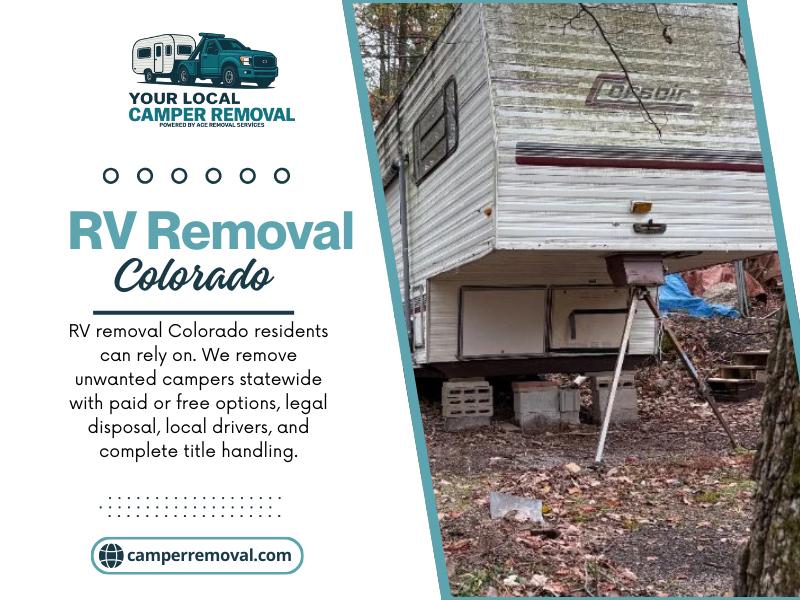
Snow accumulation is one of the biggest factors complicating RV Removal Colorado projects. Heavy snow puts prolonged pressure on RV roofs that weren’t built for years of static weight.
Over time:
• Roofs bow or crack
• Seams separate
• Water seeps inside during thaw cycles
Once water enters, freeze-thaw cycles expand cracks and rot internal supports. By the time removal begins, the RV may be structurally unsafe to tow.
RV Removal Massachusetts Concerns
In RV Removal Massachusetts, freezing temperatures combined with moisture accelerate corrosion. Frames rust faster, brake systems seize, and wheels may no longer turn.
What looks like a parked RV can suddenly become a non-movable structure requiring specialized removal planning.
Heat and Sun Exposure: Arizona’s Unique RV Problem
Desert environments cause a different kind of damage.
RV Removal Arizona Realities
Extreme heat dries out seals, hoses, and structural adhesives. Prolonged UV exposure makes fiberglass brittle and weak.
Common issues include:
• Cracked exterior panels
• Roof seal failure
• Tire sidewall blowouts
• Brittle suspension components
For RV Removal Arizona, this means the RV may physically fall apart during towing if not stabilized first. What seems like “open space” removal often demands extra care to prevent breakage.
Humidity and Storm Damage in Florida
Florida’s weather doesn’t slowly wear RVs down—it attacks them from every angle.
RV Removal Florida Complications
High humidity, salt air, and frequent storms make RV Removal Florida particularly challenging.
Over time:
• Metal components corrode rapidly
• Mold weakens floors and walls
• Electrical systems deteriorate
• Wind shifts RVs off stable footing
Hurricanes and tropical storms can also partially bury RVs under debris or flood them, making standard towing impossible.
Moisture and Ground Issues in Oregon
Weather damage isn’t just about what happens to the RV—it’s also about what happens under it.
Old Motorhome Disposal Oregon Issues
In Oregon, consistent rain and damp soil create problems for Old Motorhome Disposal Oregon projects.
Common challenges include:
• Tires sinking into soft ground
• Axles rusting into place
• RVs leaning or twisting over time
Once the ground settles unevenly, the RV’s frame may bend. Removal requires careful lifting rather than simple towing to prevent breakage.
When Weather Turns RVs Into Stationary Structures
After years of exposure, some RVs no longer behave like vehicles.
Signs include:
• Wheels that don’t rotate
• Frames fused to the ground
• Collapsed floors
• Detached roofs or walls
At this stage, RV removal becomes more like structural dismantling than transportation. Planning matters because rushing can damage nearby property, utilities, or landscaping.
Why Delaying Removal Makes Weather Damage Worse
Many homeowners delay removal hoping conditions will improve or costs will drop. Unfortunately, weather damage only moves in one direction.
Each season adds:
• More moisture intrusion
• More rust and decay
• More instability
What might have been a standard tow one year can become a complex project the next. This is one reason professionals recommend addressing RV removal sooner rather than later.
The Safety Risks of Weather-Damaged RVs
Beyond removal difficulty, weather-damaged RVs can become safety hazards.
Potential risks include:
• Roof collapse
• Floor cave-ins
• Sharp metal exposure
• Chemical leaks from batteries or tanks
Professional RV removal Colorado, RV removal Florida, and other state-specific services account for these risks during planning.
Why DIY RV Removal Often Fails After Weather Damage
Weather-damaged RVs are unpredictable. DIY attempts often underestimate this.
Common DIY failures include:
• Vehicles stuck in mud or snow
• RVs breaking apart during towing
• Damage to driveways or yards
• Injury from collapsing components
Once a DIY attempt fails, the situation usually becomes harder to resolve. That’s why assessment and preparation matter.
How Professional RV Removal Adapts to Weather Damage
Experienced services like Your Local Camper Removal don’t approach every RV the same way. Weather exposure shapes the strategy.
Professional planning may include:
• Reinforcing weak areas before movement
• Choosing lifting instead of towing
• Scheduling around seasonal conditions
• Protecting surrounding property
This flexibility is what allows safe, effective removal even when weather damage is severe.
Weather Damage Is Not a Failure—It’s Normal
Many homeowners feel embarrassed about the condition of their RV. But weather damage is normal, especially for unused vehicles.
RVs aren’t designed to sit untouched for years. Recognizing that weather changed the situation helps homeowners make practical decisions without guilt.
The Relief of Finally Removing a Weather-Damaged RV
Once removal is complete, homeowners often feel an unexpected sense of relief.
The space feels lighter. The worry disappears. The property becomes usable again.
Weather damage may be an issue, but it does not necessarily make it an impossibility.
Final Thoughts: Weather Changes Everything, Planning Makes It Manageable
From snows in Colorado and Massachusetts to heat waves in Arizona, rainfalls in Oregon, to storms in Florida, the weather is quietly altering RVs.
What starts as a simple RV becomes something entirely different after years of exposure. That’s why RV Removal Colorado, Old Motorhome Disposal Oregon, RV Removal Florida, RV Removal Arizona, and RV Removal Massachusetts projects often require thoughtful planning.
With the right approach and experienced support from RV Removal Florida, even heavily weather-damaged RVs can be removed safely and responsibly.
Related Links:
https://c8ke.me/camperremovalservices
https://igli.me/camperremovalservices
https://direct.me/camperremovals
https://penzu.com/p/6a7e0e258368c1dd
https://camperremoval.mystrikingly.com/
Related Tags:
#YourLocalCamperRemoval
#OldMotorhomeDisposalOregon
#RVRemovalFlorida
#RVRemovalArizona
#RVRemovalMassachusetts

No posts could be found.
No photos could be found.